Be Ready— and bring your pets with you
You may have seen the government’s new Be Ready campaign. Launched in October, it asks every UK household to be able to manage for three days if a storm, flood, power cut or cyber attack knocks out everyday services like electricity, water, phones or the internet.
The official checklist covers water, food, torches, cash and medicines. Pets get a single line: pet food and extra bottled water.
That’s a good start, but as vets we know your pets need a little more than that. A dog on daily medication, a cat who won’t eat anything but one brand of food, or a pair of rabbits in an outdoor hutch in January all need a plan of their own.
The good news? Getting pet-ready takes an afternoon, costs very little, and gives you real peace of mind.
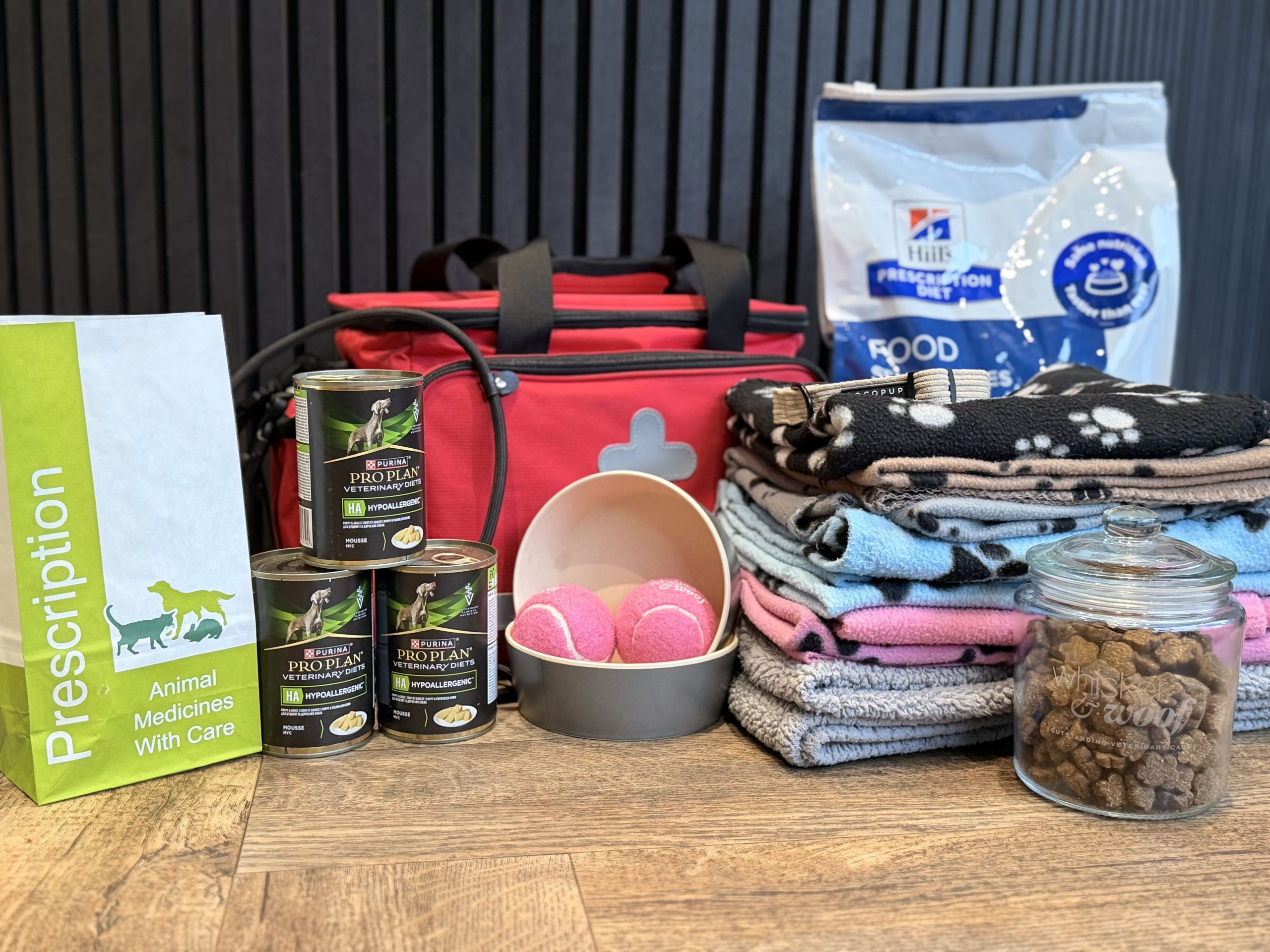
Your pet’s 3-day kit
Keep everything together in one box or bag, near your own household kit, and label it with your pet’s name.
- Food for at least three days — their usual food, not a new brand. A sudden switch can upset tummies just when you don’t need it. Tins and pouches don’t need water or cooking.
- Extra bottled water — as a rough guide, around 50–60 ml per kg of body weight a day. A 20 kg dog needs over 3 litres for three days, more in warm weather.
- Bowls — collapsible ones save space.
- Medication — at least a week’s supply of anything your pet takes regularly, plus a written note of the dose and timing.
- Lead, harness and a spare collar with an ID tag — by law, a dog’s tag must show your name and address.
- A secure carrier for every cat and small pet — one per animal, not one to share.
- Toileting kit — poo bags, a small bag of litter and a spare tray, or puppy pads.
- Bedding and a blanket — something that smells of home helps anxious pets settle.
- Paperwork — vaccination record, insurance policy number, microchip number and a recent photo of your pet (handy if they go missing).
- A basic pet first aid kit — bandage, non-stick dressings, tape, saline wash and tick remover.
- A favourite toy or chew — boredom is real when walks are cut short.
“Cats hate change, so the carrier is the most important thing in the kit. Leave it out in the living room with a blanket inside, so it becomes a den rather than the box that means the vet. Then if you ever need to move quickly, they’ll walk straight in.” — Melissa Barnett, Head Veterinary Nurse
Five things to sort this week
A kit is only half the plan. These five jobs take minutes and make the biggest difference.
- Check your microchip details. Microchipping is a legal requirement for dogs and, since June 2024, for cats in England too. But a chip only works if the details on the database are current. Moved house or changed number? Update it today.
- Don’t let prescriptions run low. If your pet is on long-term medication, order repeats before you’re down to the last few days. We ask for 3 working days notice, so build that in.
- Write things down. In a power cut or cyber outage, your phone may die and online accounts may be unreachable. Keep a paper note of your pet’s medication and doses, your insurance details, and our phone number 0203 603 4843.
- Know who to call out of hours. Save our out-of-hours provider, Medivet Beckenham 0208 650 2003, in your phone and on that paper note.
- Find a pet buddy. Emergency rest centres may not be able to take animals. Agree with a friend, family member or neighbour that you’ll look after each other’s pets if either of you has to leave home in a hurry. Swap keys and feeding notes now.
Block 4 — If the lights go out
Keep them warm. Puppies, kittens, older pets and short-coated breeds feel the cold fastest. Shut doors to keep heat in one room, and add blankets to beds. Never use a camping stove, barbecue or gas heater indoors: carbon monoxide is as dangerous for pets as it is for people.
Bring small pets in. Rabbits and guinea pigs in outdoor hutches need extra hay and shelter from wind and rain. If it turns bitterly cold, move them somewhere sheltered such as a garage or porch, away from fumes.
Mind the water. Check outdoor bowls haven’t frozen, and stick to bottled water if you’re told your tap water isn’t safe to drink.
Heat-dependent pets need a plan. Reptiles and tropical fish rely on electric heating. If you keep them, ask your specialist supplier now about insulated boxes and heat packs for a short outage.
Keep calm and keep routine. Pets read our mood. Stick to normal feeding times where you can, and give anxious pets a quiet, dark space to retreat to.
“If walks are cut short, swap them for brain games. Scatter part of their dinner in the garden or roll kibble up in a towel. Ten minutes of sniffing tires a dog out more than you’d think.” — Libby Davies, RVN
FAQ
Is the Be Ready campaign about a specific threat? No. It’s general advice to help households cope with everyday emergencies, such as storms or power cuts, for up to three days.
How much pet food should I keep spare? At least three days’ worth of their usual food. We’d suggest a week if your pet is on a prescription diet, as it’s harder to find in a hurry.
Can I stockpile my pet’s medication? Not in large amounts, but you can keep a week’s buffer. Order repeats early so you never get down to the last few doses.
What if I have to leave home? Take your pet with you if it’s safe to do so. If you can’t, your pet buddy is your backup, so set that up now.
My pet is microchipped. Am I covered? Only if the database details are up to date. Check your address and phone number today.
Who do I call if my pet is ill during an outage? Call us during opening hours, or our out-of-hours service at any other time. If the phone lines are down and it’s an emergency, go to the nearest open vet.


Subscribe to our Awesome W&W Platinum Health Plan!
Spread the cost of your pet’s preventative healthcare needs across the year via monthly direct debit, and make saving’s on neutering and dentistry too. We only use the best products in our plan for our patients. For further information, or sign-up please follow this link.