Emergencies & Out-of-Hours Care

At Whisker & Woof, we know how frightening it can be when your pet suddenly becomes seriously ill or injured. Our priority is to act quickly, calmly, and efficiently to give your pet the best possible chance of recovery, while supporting you through what can be a very stressful time.

When to Seek Urgent Care

Some symptoms require immediate veterinary attention. If you notice any of the following, please contact us straight away:

  • Difficulty breathing
  • Seizures or fitting lasting more than 5 minutes
  • Major trauma (e.g., road traffic accidents, severe wounds, falls)
  • Poisoning or ingestion of a toxic substance
  • Difficulty giving birth (dystocia)
  • Straining or inability to urinate
  • Protracted vomiting or diarrhoea
  • Collapse, weakness, or severe lethargy

Please note this is not an exhaustive list – if you are concerned about your pet, it is always safer to call us for advice.

For a fuller list of warning signs, including breathing, neurological, eye and poisoning emergencies, see our Emergencies page.


Before You Set Off: What to Do in an Emergency

Always call first. A quick call lets us give you advice straight away and get ready for your pet’s arrival. Outside our opening hours, our phone line will direct you to our out-of-hours provider.

While you’re on your way:

  • Stay as calm as you can. Pets pick up on our stress, and a calm voice helps.
  • Bleeding: press firmly on the wound with a clean cloth or towel and keep the pressure on.
  • Suspected poisoning: bring the packaging, plant or label with you. Don’t try to make your pet sick unless a vet has told you to.
  • Overheating: move your pet somewhere cool, wet their coat with cool (not ice-cold) water and travel with the air conditioning on or the windows open.
  • Seizures: keep your pet away from stairs and furniture, dim the lights and keep your hands away from their mouth. Note the time it starts and stops.
  • Injuries: even the gentlest pet may bite when in pain. Move them carefully, using a blanket or board as a stretcher for larger dogs. Cats travel most safely in a carrier.

Our Emergency & Critical Care Facilities

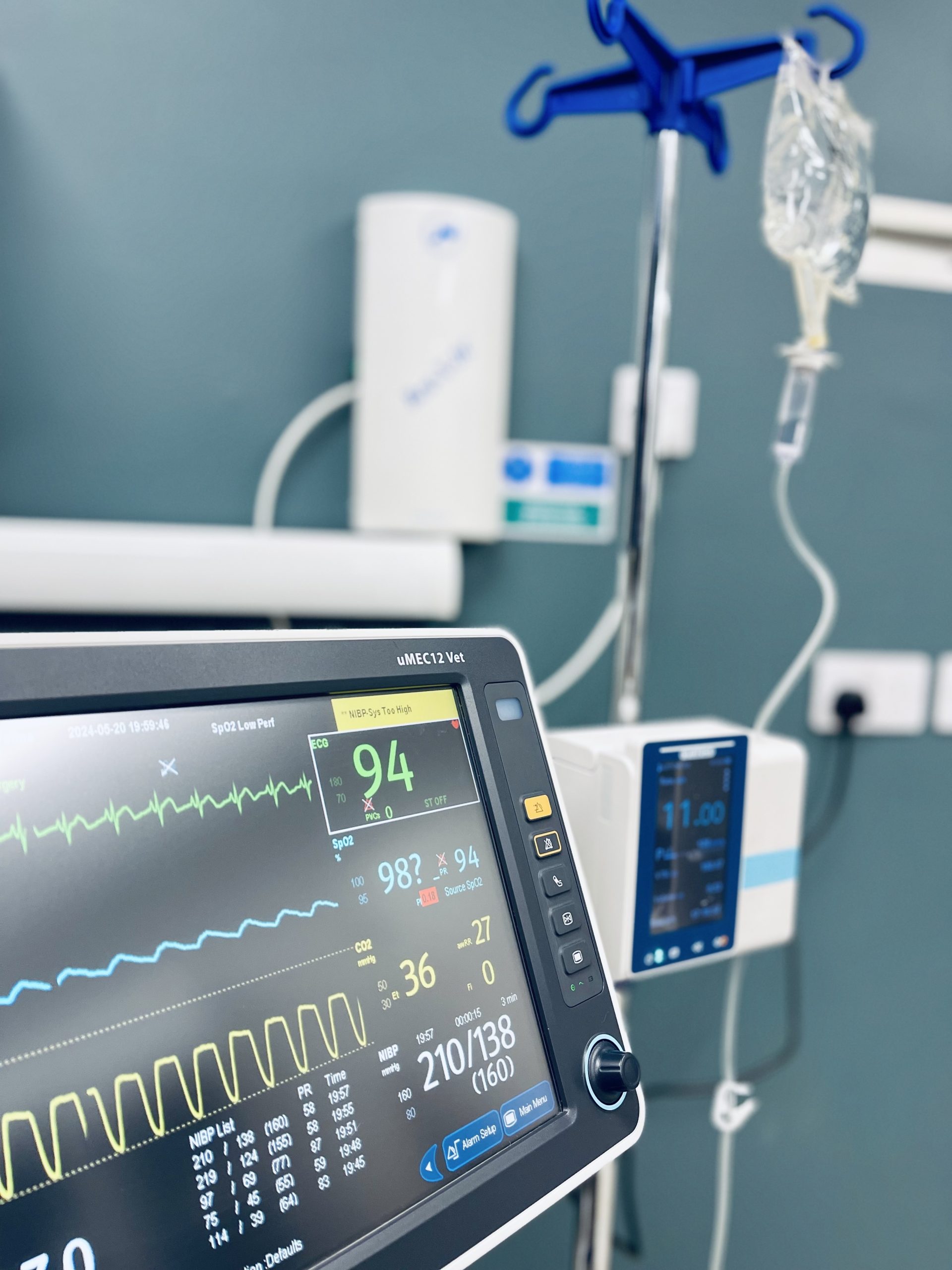
We are equipped to deal with a wide range of urgent and emergency situations on-site. Our facilities include:

  • Dedicated treatment and triage area – allowing rapid assessment and stabilisation
  • Modern digital radiography and ultrasound – for fast imaging and diagnosis
  • In-house laboratory – enabling immediate blood tests and critical sample analysis
  • Oxygen therapy – with oxygen cages for pets in respiratory distress
  • Intravenous fluid therapy and infusion pumps – for precise fluid and medication delivery
  • Separate dog and cat wards – to minimise stress during hospitalisation
  • Isolation ward – for safe treatment of infectious patients

Our veterinary team works closely with our Registered Veterinary Nurses (RVNs), led by Head Veterinary Nurse Melissa Barnett RVN, who holds the CertVN ECC (Certificate in Emergency and Critical Care). Her advanced training means your pet benefits from skilled nursing, close monitoring and compassionate care when they need it most.

During Opening Hours

If your pet experiences an emergency during our normal opening hours:

  1. Call us immediately to advise us of your pet’s symptoms.
  2. Our team will guide you on the next steps and prepare for your arrival.
  3. When you arrive, your pet will be triaged promptly, and we will begin stabilisation and diagnostics as needed.

Our goal is to prioritise urgent and emergency patients as quickly as possible while keeping you informed throughout the process.

What Happens When You Arrive

When you arrive, a member of our team will assess your pet straight away. In a true emergency we may take them through to our treatment area immediately to start stabilising them, and we’ll come back to talk with you as soon as we can.

  • Pain relief comes early. As London’s first Zero Pain Philosophy practice, we treat pain as a priority, not an afterthought.
  • Experienced emergency nursing. Our Head Veterinary Nurse, Melissa Barnett RVN, holds the Certificate in Emergency and Critical Care.
  • Answers on site. Our in-house laboratory, digital X-ray and ultrasound mean we can often find out what’s wrong quickly, without sending samples away.
  • Clear costs. Once your pet is stable, we’ll explain the options and give you an estimate before further treatment, wherever the situation allows.
  • Regular updates. If your pet stays with us, we’ll keep you updated throughout the day.

Out-of-Hours Care

If your pet needs urgent care outside of our normal opening times, our phone line will direct you via an answer message to:

Medivet Beckenham
? 0208 650 2003

Their experienced veterinary team provides emergency and critical care overnight, at weekends, and on bank holidays.

Coming Back to Us After Out-of-Hours Care

If your pet is seen overnight or at the weekend, their clinical records are shared securely between Medivet Beckenham and Whisker & Woof. Where it’s appropriate, your pet can then come back to us for follow-up checks, ongoing treatment and daytime care, so they continue to be looked after by the team who knows them.

Give us a call on our next working day and we’ll arrange the next steps with you.

Hospitalised Patients

If your pet is already hospitalised with us and needs continued monitoring or treatment overnight, we will arrange for them to be transferred to Medivet Beckenham for ongoing care. Owners are responsible for transporting their pet to and from the out-of-hours provider.

Fees and Insurance

Medivet Beckenham operates independently of Whisker & Woof. All payments, including insurance claims, are made directly with them. We recommend checking your insurance policy to ensure you are covered for out-of-hours treatment.

Be Prepared: Five Things to Do Today

A few minutes now can save precious time in an emergency:

  1. Save both numbers in your phone: Whisker & Woof on 0203 603 4843, and Medivet Beckenham on 0208 650 2003.
  2. Check the route to Medivet Beckenham, so you know how long it takes to get there at night.
  3. Check your insurance covers emergency and out-of-hours treatment, and keep your policy number handy.
  4. Keep a carrier ready for cats and small pets, and a spare lead for dogs.
  5. Write down your pet’s medication and any ongoing conditions, so you can share them quickly.

Frequently Asked Questions

Local independent vets in Blackheath

Based on Lee Road in Blackheath, we welcome pets and their owners from across the surrounding area, including Lewisham and Greenwich.