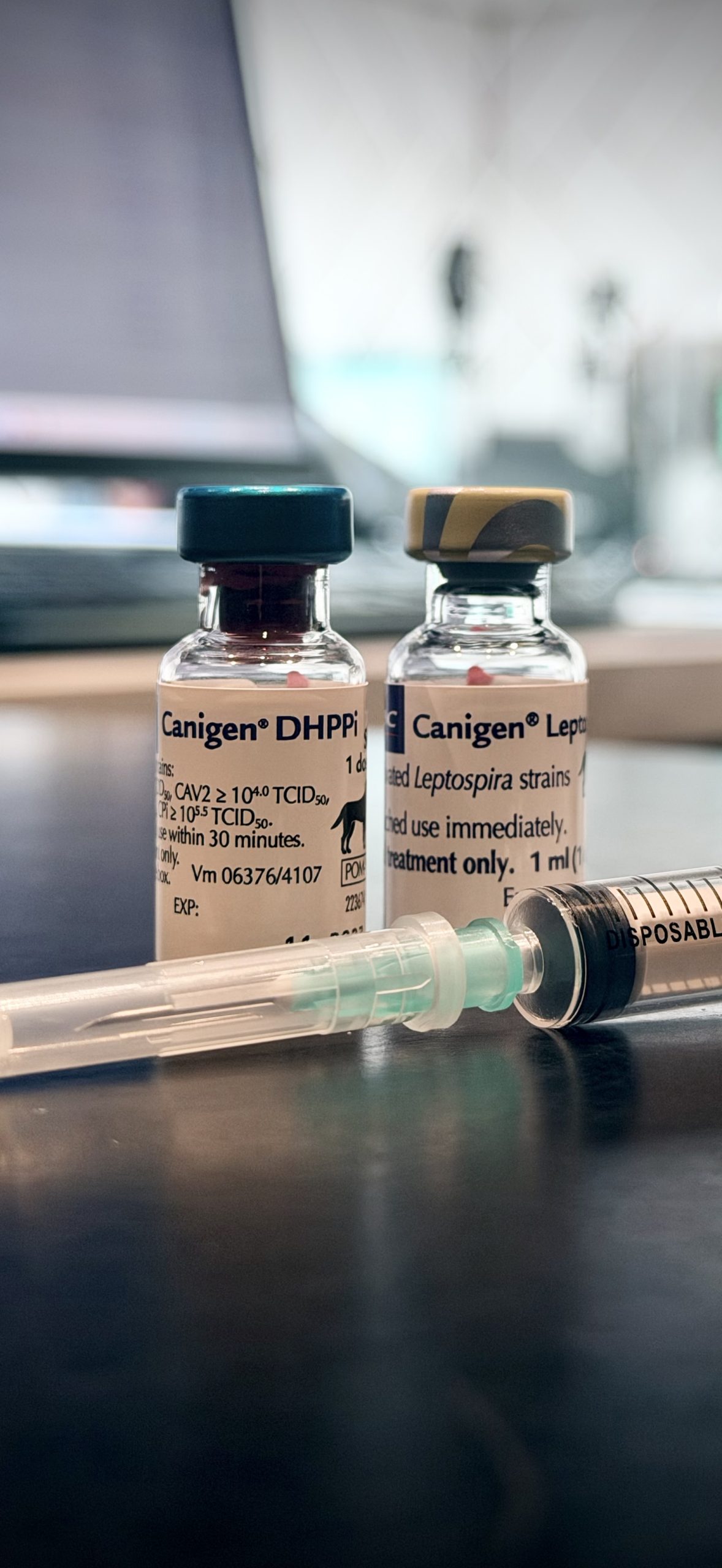
Dog Vaccinations in Blackheath: Boosters and Health Checks
Every dog in the UK should be vaccinated against four core diseases: distemper, hepatitis, parvovirus and leptospirosis. Once the puppy course and the first booster at 12 to 15 months are complete, the leptospirosis vaccine is given every year, and distemper, hepatitis and parvovirus every three years. At Whisker & Woof in Blackheath, every annual dog booster comes with a full nose-to-tail health check.
The core vaccines every dog needs
These four diseases are serious, often fatal, and still around in the UK. That’s why we recommend them for every dog, whatever their lifestyle.
- Distemper — a virus spread by coughs and sneezes. It attacks the lungs, gut and nervous system, and dogs who survive can be left with lifelong fits or twitching.
- Infectious canine hepatitis — a virus that damages the liver, kidneys and eyes. It’s rare in the UK now, and vaccination is the reason why.
- Parvovirus — a very tough virus that causes severe vomiting and bloody diarrhoea. It can survive on pavements and in parks for months, and puppies and unvaccinated dogs are most at risk.
- Leptospirosis — a bacterial infection dogs catch from water and the urine of rats. It can cause kidney and liver failure, and it can spread to people too. City dogs aren’t safe from it: ponds, puddles and riverbanks are all sources.
Optional vaccines and when we recommend them
Some vaccines depend on how your dog lives. We’ll only recommend them if your dog actually needs them.
Kennel cough (infectious bronchitis that causes a harsh, honking cough) spreads wherever dogs mix closely. We recommend it if your dog goes to boarding kennels, daycare, group walks, grooming or training classes, or plays with lots of other dogs at the park. Most kennels and daycares won’t take a dog without it. It isn’t an injection: it’s a quick spray of drops up the nose, and it lasts 12 months. If your dog is going to kennels, have it done at least 3 weeks beforehand.
Rabies is only needed if your dog is travelling abroad, because the UK is rabies-free. Your dog must be microchipped first and at least 12 weeks old, and you’ll need to wait 21 days after the jab before you travel. For trips to the EU, your dog will also need an Animal Health Certificate (AHC), issued by an Official Veterinarian within 10 days of travel. Some countries outside the EU need an Export Health Certificate (EHC) instead. We can issue both here at Whisker & Woof, so book in good time before you go. After that, the rabies vaccine is boosted every three years.
How often does my dog need a booster?
Your dog needs a booster every year, but not every vaccine is given every year. Leptospirosis protection fades within about a year, so it’s topped up annually. Distemper, hepatitis and parvovirus protection lasts much longer, so we give those every three years.
| Vaccine | How often (after the first booster at 12–15 months) |
| Leptospirosis | Every year |
| Distemper, hepatitis, parvovirus | Every 3 years |
| Kennel cough (optional) | Every year |
| Rabies (travel only) | Every 3 years |
That means two years out of three, your dog’s booster is just leptospirosis (plus kennel cough if they need it). We don’t give vaccines your dog doesn’t need. If you’d like to avoid an unnecessary booster, we also offer titre testing, a blood test that checks whether your dog is still protected against distemper, hepatitis and parvovirus. It doesn’t work for leptospirosis, so that part still needs to be given yearly.
Why the yearly visit still matters: a year is a big slice of a dog’s life. The annual check is often where we first pick up dental disease, a new lump, a heart murmur, weight gain or early arthritis, while there’s still plenty we can do about it.
What happens at your dog’s booster appointment
A booster appointment is 15 minutes with one of our vets. The vaccination itself takes a few seconds. Most of the time is spent on a full nose-to-tail health check, which covers:
- A chat about how your dog has been: appetite, energy, behaviour and any changes you’ve noticed
- Eyes, ears, mouth and teeth
- Listening to the heart and lungs
- Skin, coat and body condition
- Joints, lymph nodes and tummy
- Weight, so we can track it from year to year
We record everything, so we can spot slow changes over time.
Nervous dogs: we’re an accredited Dog Friendly Clinic (Dogs Trust and the British Veterinary Behaviour Association), and Libby Davies is our dog advocate. We take things slowly, use low-stress handling and plenty of treats, and let your dog settle before we start. If your dog finds visits very hard, mention it when you book. We can plan a calmer visit and, where appropriate, prescribe calming medication to give beforehand. As London’s first Zero Pain Philosophy accredited practice, we also think about comfort at every step, right down to the smallest injection.
Spreading the cost of your dog’s vaccinations
The easiest way to budget for your dog’s boosters is our W&W Platinum Health Plan. It spreads the cost of their preventative care across the year with a simple monthly direct debit, and includes:
- Annual vaccination and full health check
- Flea, worm and tick treatment all year round
- Free microchipping
- 10% off neutering and dental treatment
The health plan covers preventative care, not illness or injury, so we’d still recommend pet insurance alongside it. For our current vaccination prices, give us a call on 0203 603 4843.
What if my dog’s boosters have lapsed?
If your dog is more than 3 months late for their leptospirosis booster, they’ll usually need a restart course of two injections, 4 weeks apart. That’s because leptospirosis protection drops quickly once it’s overdue.
Distemper, hepatitis and parvovirus are more forgiving. If those have lapsed, a single injection usually brings your dog back up to date. Bring your dog’s vaccination card, or tell us where they were last seen, and we’ll work out exactly what they need. Until they’re covered, keep them away from ponds, standing water and kennels.
Dog vaccination FAQs
Are yearly dog vaccinations really necessary? Yes, but not every vaccine is needed every year. Leptospirosis protection only lasts about a year, so that part is given annually. Distemper, hepatitis and parvovirus are given every three years. The yearly visit also includes a full health check, which often catches problems early.
How much do dog vaccinations cost? It depends on which vaccines your dog needs that year, and every booster here includes a full health check. Call us on 0203 603 4843 for our current prices. You can also spread the cost with our Platinum Health Plan, which includes the annual booster, health check and year-round parasite treatment.
Does my dog need the kennel cough vaccine? Only if they mix closely with other dogs. We recommend it for dogs who go to kennels, daycare, group walks, grooming or training classes. Most kennels and daycares require it, so check before you book.
What happens if my dog misses a booster? If they’re only a little late, we can usually just give the booster. If their leptospirosis booster is more than 3 months overdue, they’ll need a restart course of two injections. Bring their card and we’ll tell you exactly what’s needed.
Can my dog have side effects from a booster? Yes, but they’re usually mild and short-lived. Some dogs are a bit sleepy or sore for a day, or have a small lump where the needle went in. Serious reactions are rare. If your dog’s face swells, they’re sick repeatedly or struggle to breathe, call us straight away on 0203 603 4843.
Do older dogs still need vaccinations? Yes. Older dogs’ immune systems weaken with age, so staying protected matters. If you’d like to avoid unnecessary jabs, titre testing can check whether your senior dog still has protection against distemper, hepatitis and parvovirus. The annual health check matters even more as dogs get older.


Outstanding Veterinary Care
“Everytime. That’s our promise to you” Jason Way BVetMed CertSAM MRCVS, Founder and Head Veterinary Surgeon, Whisker & Woof