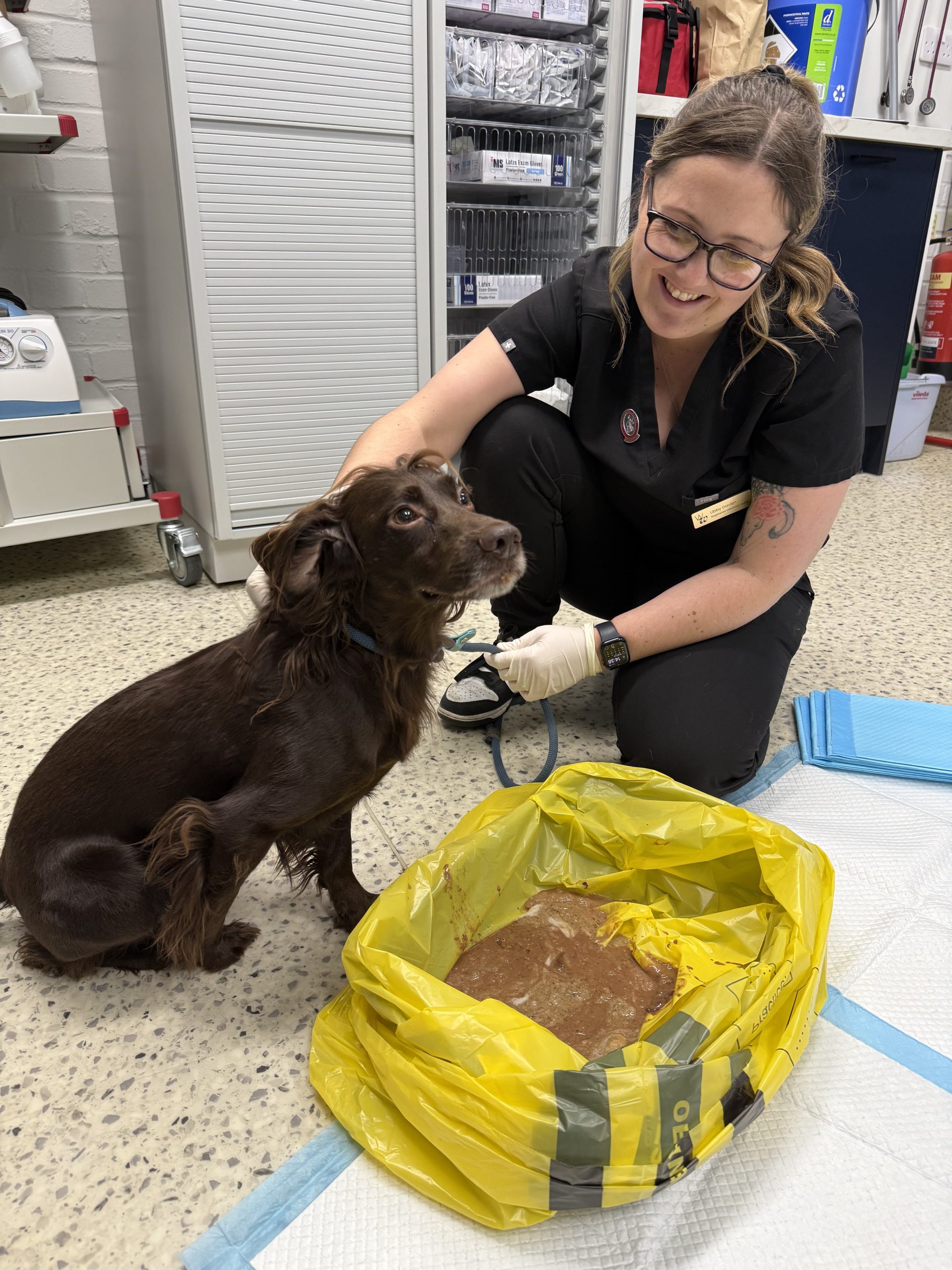
Why Is My Dog Vomiting?
What Is Vomiting?
Vomiting is the forceful emptying of contents from the stomach or upper intestine. It is different from regurgitation, where food or fluid comes back up passively without retching.
Dogs may vomit food, bile (yellow fluid), foam, grass, blood, and foreign material.
Occasional vomiting can occur in otherwise healthy dogs, but repeated or persistent vomiting should always be taken seriously.
Acute Vomiting in Dogs
Acute vomiting means vomiting that starts suddenly and has usually been present for less than a few days.
Common causes include:
Dietary Indiscretion (“Scavenging”)
Dogs are notorious for eating things they shouldn’t such as spoiled food, table scraps, grass, and non-food objects. This is one of the most common causes of sudden vomiting. Some patients have an abnormal appetite (pica) which can be a symptom of underlying gastrointestinal disease.
Sudden Diet Changes
Changing food too quickly can upset the digestive system and trigger vomiting or diarrhoea.
Gastroenteritis
Inflammation of the stomach and intestines may be caused by, viruses, bacteria, stress, and parasites. Dogs with gastroenteritis often vomit repeatedly and may also have diarrhoea.
Foreign Body Obstruction
Dogs sometimes swallow objects such as toys, socks, bones, corn cobs, string, and stones.
These can become lodged in the stomach or intestines and may require emergency surgery.
Signs can include:
- repeated vomiting
- inability to keep food down
- abdominal pain
- lethargy
- loss of appetite
Toxins and Poisoning
Certain substances are highly toxic to dogs, including:
- chocolate
- grapes and raisins
- xylitol
- medications
- antifreeze
- some plants
Vomiting after toxin exposure should always be treated as urgent.
Pancreatitis
Pancreatitis is inflammation of the pancreas and can range from mild to life-threatening.
It is commonly associated with ingestion of fatty foods, obesity, and certain underlying diseases. Affected dogs may vomit repeatedly, appear painful, and become very lethargic.
Chronic Vomiting in Dogs
Chronic vomiting refers to vomiting that continues for weeks or months, occuring intermittently, or repeatedly returns over time. This should never simply be dismissed as a “sensitive stomach.”
Possible causes include:
Food Sensitivities or Allergies
Some dogs develop adverse reactions to ingredients in their diet. Signs may include intermittent vomiting, diarrhoea, itchy skin, and recurrent or ongoing ear infections.
Chronic Gastritis
Ongoing inflammation of the stomach lining can cause repeated vomiting, nausea, and poor appetite.
Inflammatory Bowel Disease (IBD)
IBD is a chronic inflammatory condition affecting the digestive tract.
Symptoms can include:
- vomiting
- diarrhoea
- weight loss
- reduced appetite
- fluid retention in the abdomen
Liver or Kidney Disease
Systemic illnesses can cause nausea and vomiting due to toxin build-up within the body. Older dogs with chronic vomiting may require blood tests to assess organ function.
Endocrine Disorders
Conditions such as Addison’s disease, diabetes, and other hormonal disorders can all contribute to vomiting.
Stomach Ulcers
Ulcers may develop due to medications, underlying disease, and chronic inflammation. Vomiting blood or dark material can indicate bleeding ulcers and requires urgent assessment.
Cancer
In some cases, persistent vomiting can be linked to tumours affecting the digestive tract or abdominal organs, particularly in older dogs.
Yellow Vomit or Foam — What Does It Mean?
Many owners notice their dog vomiting yellow bile or white foam. This can occur when the stomach is empty, there is mild stomach irritation, or vomiting has been ongoing for some time. The presence of bile indicates the entrance from the stomach to the small intestine is open. Occasional bile vomiting may not be serious, but repeated episodes should still be investigated to rule out underlying disease.
When Should You Seek Veterinary Advice?
You should contact a vet promptly if your dog:
- vomits repeatedly
- cannot keep water down
- seems lethargic or weak
- has abdominal pain
- has diarrhoea alongside vomiting
- is shaking or distressed
- has swallowed a foreign object
- may have eaten something toxic
- is bloated or retching without producing vomit
- vomits blood
- has pale gums
- develops collapse or breathing changes
Puppies, elderly dogs, and dogs with underlying health conditions can deteriorate much more quickly and should be assessed sooner.
Is One Episode of Vomiting an Emergency?
Not always. If your dog vomits once but remains bright, is eating normally, drinks water, and has no other symptoms, it may simply be a mild stomach upset. However, if vomiting continues, worsens, or is accompanied by any concerning signs, veterinary assessment is important.
How Vets Investigate Vomiting
Depending on your dog’s symptoms, your vet may recommend a physical examination, blood tests, abdominal imaging, ultrasound, x-rays, faecal testing, and dietary trials.
The goal is not only to stop the vomiting, but to identify and treat the underlying cause.
Caring for Dogs with Vomiting
Treatment depends entirely on the cause and may include, anti-nausea medication, fluid therapy, dietary management, pain relief, hospitalisation, sometimes surgery if indicated. At Whisker & Woof, we believe pets experiencing pain, nausea, or distress should be managed compassionately and proactively. Early assessment can often prevent conditions from becoming more serious.
Final Thoughts
Vomiting in dogs can range from mild and self-limiting to potentially life-threatening. While occasional vomiting may not always be an emergency, persistent, severe, or recurrent vomiting should never be ignored.
If you are unsure whether your dog needs to be seen, it is always safest to seek veterinary advice — especially if your pet seems unwell, painful, or unable to keep food or water down.
If you are concerned about your dog, contact us on 0203 603 4843, for advice or to arrange an appointment.


Join the Whisker & Woof Family!
Register online, by phone or in person at our brand new clinic for the very best in pet healthcare.